Why Wood Changes Color Where Hands Keep Touching It
Wood changes color where hands touch it for several reasons. Learn how to distinguish grime, polished finish, fading, and damage before choosing care.
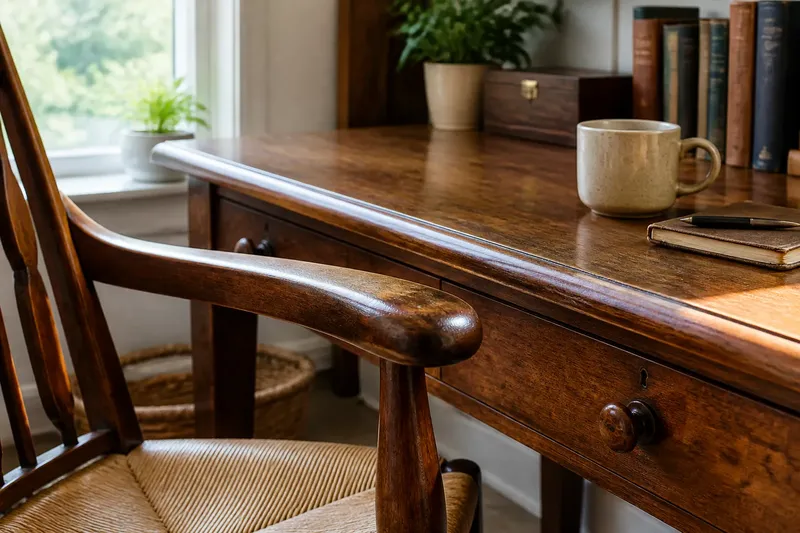
The common mistake with a wooden chair arm, drawer pull, or table edge is treating every dark or shiny patch as damage that needs sanding. Wood changes color where hands keep touching it because skin oils, light, dust, and surface wear affect the wood and its finish in different ways. Acting before identifying the cause can remove a sound finish and leave a harder repair.
Compare the changed area with a protected spot
Look at the affected area in daylight, then compare it with a sheltered part of the same object. Check beneath a chair rail, behind a drawer front, or under a removable tray. A change confined to the surface may call for gentle cleaning; one that appears to run through the wood may have a different cause.
Notice the shape, sheen, and feel. A hand-shaped patch on an armrest may point to handling. A smooth, pale strip along an exposed edge may indicate abrasion or a worn coating. A cloudy ring, sticky spot, or rough raised grain needs a different response from an even color change.
Remove loose dust with a soft, dry cloth before judging the surface. Avoid hard rubbing: dust can act like fine grit, and aggressive wiping can alter the sheen you are trying to assess. Follow the maker’s care instructions if available, since finish type and product directions matter.
Dark patches may be grime or a deeper color shift
Hands leave skin oils, perspiration, and traces of other materials. These residues collect on chair arms and cabinet pulls, where they hold dust and make the surface look darker or more polished. On open-grain wood, grime may settle into the texture rather than sit in a distinct film.
Start gently. Wipe with a clean, soft cloth barely dampened with water, then dry promptly with another cloth. Do not soak the wood or scrub with a rough pad. If the mark remains, check the maker’s guidance before using a wood cleaner; a product suited to one finish may cloud or strip another.
Say you have a maple desk with a dark band where a wrist rests. The hypothetical starting observations are a smooth surface, an intact finish, and no stickiness. Clean a small, hidden area using the maker’s recommended method, then let it dry. If loose grime lifts, use that same gentle method on the band; if the color remains, stop rather than escalate to stronger cleaner, because handling or light may have changed the finish or wood itself.
Glossy spots can reflect repeated contact
Repeated contact can smooth tiny irregularities in a finish, making a touchpoint reflect more light. The patch may look darker from one angle and lighter from another, even when its pigment has not changed. This often appears on handrails, desk edges, and the front lip of a table.
View the area from several angles. If the finish is continuous, not tacky, and not flaking, the extra shine may be ordinary wear. Clean gently and leave it alone if the difference is mainly visual. Rubbing with polish or adding a coating can create a more obvious patch.
If the finish feels sticky, transfers color to a cloth, or has cracked edges, stop cleaning and identify the coating before attempting repair. Wax, oil, shellac, varnish, and modern film finishes do not respond alike. Ask a furniture conservator or qualified repairer for help with a valuable or sentimental piece when the finish is uncertain.
Faded patches can trace light or friction
Sunlight and strong indoor light can alter the color of wood and some finishes. A pale area may show where a runner, bowl, or lamp once shielded the surface, or where one side of a chair sat near a window. Friction can also lighten an edge by thinning or dulling its coating.
Move removable objects occasionally and use curtains or blinds to reduce direct light on vulnerable furniture. These habits can limit further uneven exposure, but they cannot restore color already changed by light. Covering a faded patch with a dark object will not reliably even the color; the sheltered area may remain different.
Roughness points to wear beyond color
Wood fibers can become more noticeable after repeated wiping, moisture, or abrasion. Lightly run a clean fingertip across the grain. If the area feels fuzzy or catches a cloth, the issue is not just a color shift. Repeated wet cleaning can swell fibers, while abrasive scrubbing can cut the finish and expose the wood beneath it.
For routine care, use a dry or barely damp soft cloth and wipe with the grain. Dry spills promptly. Do not sand a small rough patch as a first response: sanding can remove surrounding finish and make a larger mismatch. If the wood is splintering, the coating is lifting, or the roughness keeps returning, seek advice from a repair professional.
Which signs distinguish ordinary wear from damage?
Is a darker touchpoint always dirt?
No. It may be surface residue, a change in finish sheen, or a deeper color shift from handling and light. If gentle cleaning removes some but not all of the difference, stop before trying stronger products.
Does a shiny patch mean the wood needs refinishing?
Not by itself. A continuous, smooth finish can become glossier where hands repeatedly pass over it, and that change may be cosmetic. Consider refinishing only if the coating is failing or the appearance substantially bothers you.
Can oil restore the original color?
Do not assume it can. Oil may darken bare wood or alter a compatible finish, but it can also leave a sticky or uneven surface when used on the wrong coating. Check the care instructions and test any approved product in an inconspicuous place before broader use.
When should you ask a repairer?
Ask a qualified repairer if the finish is peeling, the wood is splitting, a stain has an unknown source, or the object has significant monetary or sentimental value. A repairer can identify the likely coating and explain whether cleaning, local repair, or leaving the patina intact makes the most sense.
Choose a response based on what you observe
Use the least disruptive option that matches the surface. Each check below leads to a practical decision:
- Check for loose dust with a soft cloth; if dust lifts and the surface looks even, stop there, but if a mark remains, inspect its feel and sheen.
- Check whether a dark patch is smooth and the finish intact; if so, try the maker-approved gentle cleaning method in a hidden spot, but if the finish is sticky or cracked, stop and seek advice.
- Check whether a patch changes appearance as you view it from different angles; if it mainly looks glossier and the coating is continuous, leave it or clean gently, but if it flakes, consult a repairer.
- Check for a pale area beside a window or beneath a former object; if its position suggests uneven light, reduce direct exposure, but if the coating is lifting, ask a qualified repairer.
- Check whether the grain feels fuzzy or catches a cloth; if it does not, avoid sanding and continue gentle care, but if it does, stop wet wiping and get advice if roughness persists.
- Check the maker’s instructions before applying cleaner, oil, or polish; if the product is approved for the finish, test it in an inconspicuous spot, but if the finish is unknown or the instructions are unavailable, do not apply it.
This is like a wooden spoon whose handle has become smooth through use: contact leaves a visible trace, but the trace alone does not mean the object has failed. Treat changes where hands keep touching wood as a reason to inspect the surface, not an automatic order to erase its history.